Shady Detectives
-
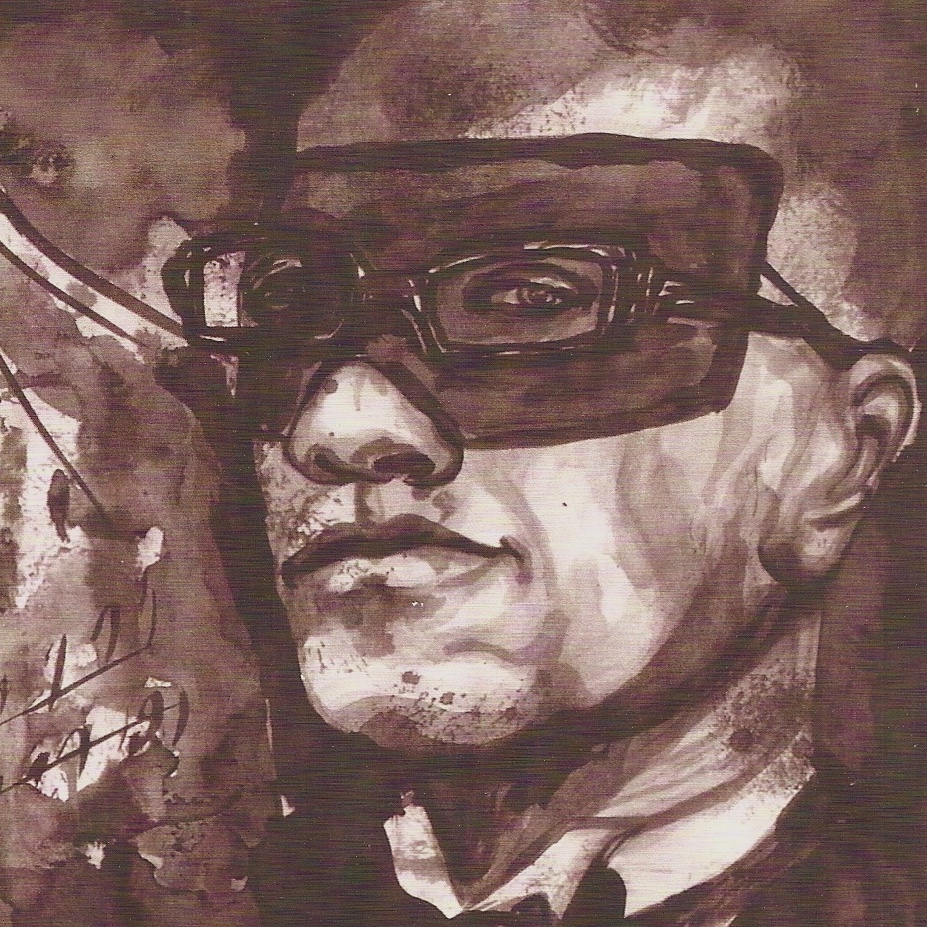
Portrait of Georges Simenon as Chief Inspector Maigret. Harcourt Studio, Paris, 1952. Wikimedia Commons: Médiathèque du patrimoine et de la photographie (MPP). At midnight on February 20, 1931, a bal anthropométrique “gala for criminal recidivists” got underway at La Boule Blanche nightclub in Montparnasse. The event was sponsored by Parisian publisher Arthème Fayard to launch…
-
Commemorative postage stamp for criminologist Edmond Locard. Engraving by Claude Andréotto. Communiqué de Presse, February 2016: La Poste. Dr. Edmond Locard is the most renowned French criminologist of twentieth century. He founded the police forensics laboratory in Lyon and was a prolific author of true crime books. In the nineteenth century, retired Paris Police Prefects…
-
“Villiod, Commercial and Confidential Information Services: Inquiries, Research, Surveillance.” Poster by Leonetto Cappiello, 1909. Image Source: Capiello’s Posters. While Eugène Villiod energetically promoted his detective agency by offering diverse services and publishing multiple books on criminal activities and gambling, his entrepreneurial efforts failed to generate substantial revenues. Then, Dame Fortune smiled upon him. One of…
-
“E. Villiod, Détective.” Frontispiece photo-portrait in Comment on nous vole, comment on nous tue (“How They Rob Us, How They Kill Us”). Paris: Chez l’Auteur, 1905. Author’s collection. Without a doubt, the most enterprising French private detective of the Belle Époque was Eugène Villiod. From 1899 to the mid-1930s, Villiod operated a private detective agency…
-
La Fille de Fantômas by Pierre Souvestre and Marcel Allain, vol. 8. Cover illustration by Gino Starace. Paris: Arthème Fayard, 1911 (1920s reprint). Author’s Collection. In the eighth Fantômas novel, Souvstre and Allain added a new core character to the series, Hélène, the “Daughter of Fantômas.” Born in South Africa and ignorant of her parentage,…
-
Fantômas by Pierre Souvestre and Marcel Allain. Anonymous Cover Illustration. Paris: Arthème Fayard, 1911. Author’s Collection. Fantômas burst upon the scene on February 10, 1911. The book’s cover portrays a man dressed in tuxedo, top hat, and ball mask looming over the Paris landscape, concealing a bloody knife behind his back. He stares impassively at…
-
Cover of Le Mystère de la Chambre Jaune by Gaston Leroux. Paris: Pierre Lafitte, 1908. Criminocorpus.org: Bibliothèque des littératures policières, Paris. No one could explain it. Late at night, Mademoiselle Mathilde Stangerson had retired to the guest bedroom attached to her father’s pavilion laboratory, rather than return to the family chateau. At half-past midnight, the…
-
Cover of Arsène Lupin, Gentleman Cambrioleur (“Gentleman Burglar”). Éditions Pierre Lafitte, 1914 (reissue 1921). Illustration by Léo Fontan. Author’s Collection. By 1905, author Maurice Leblanc had hit upon hard times. Born in 1867 to a privileged bourgeois family from Rouen in Normandy, Maurice was well poised to become a literary celebrity. Acclaimed novelist Gustave Flaubert…
-
“A Railway Drama: The Montmoreau Affair.” In Le Petit Journal, Supplément Illustré, Saturday, May 16, 1891. Author’s collection. From his prison cell, the celebrated “gentleman burglar” Arsène Lupin had been taunting Sûreté Inspector Ganimard for several weeks.[1] Charged with multiple counts of grand theft, Lupin declared he would not be attending his trial. When the…
-
Sample portrait parlé (“talking portrait”) anthropometric identity card with Alphonse Bertillon’s self-portrait photo, May 14, 1891. Wikipedia Commons: Criminocorpus.org. While Émile Gaboriau enhanced the image of the Paris police by creating the upright fictional Sûreté Detective Monsieur Lecoq, Alphonse Bertillon set out to reform actual practices at the Paris Prefecture of Police. Applying statistics to…

