-
Fantômas by Pierre Souvestre and Marcel Allain. Anonymous Cover Illustration. Paris: Arthème Fayard, 1911. Author’s Collection. Fantômas burst upon the scene on February 10, 1911. The book’s cover portrays a man dressed in tuxedo, top hat, and ball mask looming over the Paris landscape, concealing a bloody knife behind his back. He stares impassively at…
-
Cover of Le Mystère de la Chambre Jaune by Gaston Leroux. Paris: Pierre Lafitte, 1908. Criminocorpus.org: Bibliothèque des littératures policières, Paris. No one could explain it. Late at night, Mademoiselle Mathilde Stangerson had retired to the guest bedroom attached to her father’s pavilion laboratory, rather than return to the family chateau. At half-past midnight, the…
-
Cover of Arsène Lupin, Gentleman Cambrioleur (“Gentleman Burglar”). Éditions Pierre Lafitte, 1914 (reissue 1921). Illustration by Léo Fontan. Author’s Collection. By 1905, author Maurice Leblanc had hit upon hard times. Born in 1867 to a privileged bourgeois family from Rouen in Normandy, Maurice was well poised to become a literary celebrity. Renowned novelist Gustave Flaubert…
-
“A Railway Drama: The Montmoreau Affair.” In Le Petit Journal, Supplément Illustré, Saturday, May 16, 1891. Author’s collection. From his prison cell, the celebrated “gentleman burglar” Arsène Lupin had been taunting Sûreté Inspector Ganimard for several weeks.[1] Charged with multiple counts of grand theft, Lupin declared he would not be attending his trial. When the…
-
Sample portrait parlé (“talking portrait”) anthropometric identity card with Alphonse Bertillon’s self-portrait photo, May 14, 1891. Wikipedia Commons: Criminocorpus.org. While Émile Gaboriau enhanced the image of the Paris police by creating the upright fictional Sûreté Detective Monsieur Lecoq, Alphonse Bertillon set out to reform actual practices at the Paris Prefecture of Police. Applying statistics to…
-
Publicity Poster for the crime novel L’Amour à Paris by Mr. Goron, former Sûreté Chief, serialized in Le Journal (1889) and purportedly drawn from his Mémoires Inédites (“Unabridged Memoirs”). Illustrated by Paul Balluriau. Gallica: Bibliothèque nationale de France. While Vidocq’s Mémoires laid foundations for the police memoir genre, he was not the first to write…
-
Le Jargon, ou le langage de l’Argot Réforme (Troyes: Girardon, 1660). Bibliothèque bleue chapbook cover. Gallica: Bibliothèque nationale de France. Two centuries before Paul Féval penned Les Habits Noirs, French readers were already taking delight in publications about argot slang and an imaginary criminal underworld. The foundational Bibliothèque bleue chapbook in this regard is Le…
-
Caricature of Paul Féval by André Gill. La Lune, September 16, 1866. Wikimedia Commons: Public Domain. In 1866, popular novelist Paul Féval lamented, “For several years now, the crime industry just hasn’t been delivering the goods.”[1] By his calculation, there were upwards of two million upright and intelligent French readers who were dying for crime…
-
“The Vicount Ponson du Terrail” by André Gill. La Lune, February 24, 1867. Wikimedia Commons: Universitätsbibliothek, Heidelberg. Q: Who or what is Rocambole? A: Rocambole is the son of Ponson du Terrail, who created and gave birth to Rocambole. Q: Why did Ponson du Terrail create and give birth to Rocambole? A: Ponson du Terrail…
Welcome! If this is your first visit, I recommend starting with the Introduction
Want to know more? Look at About this Blog
Looking for a particular post? Check the Table of Contents
Explore and enjoy!
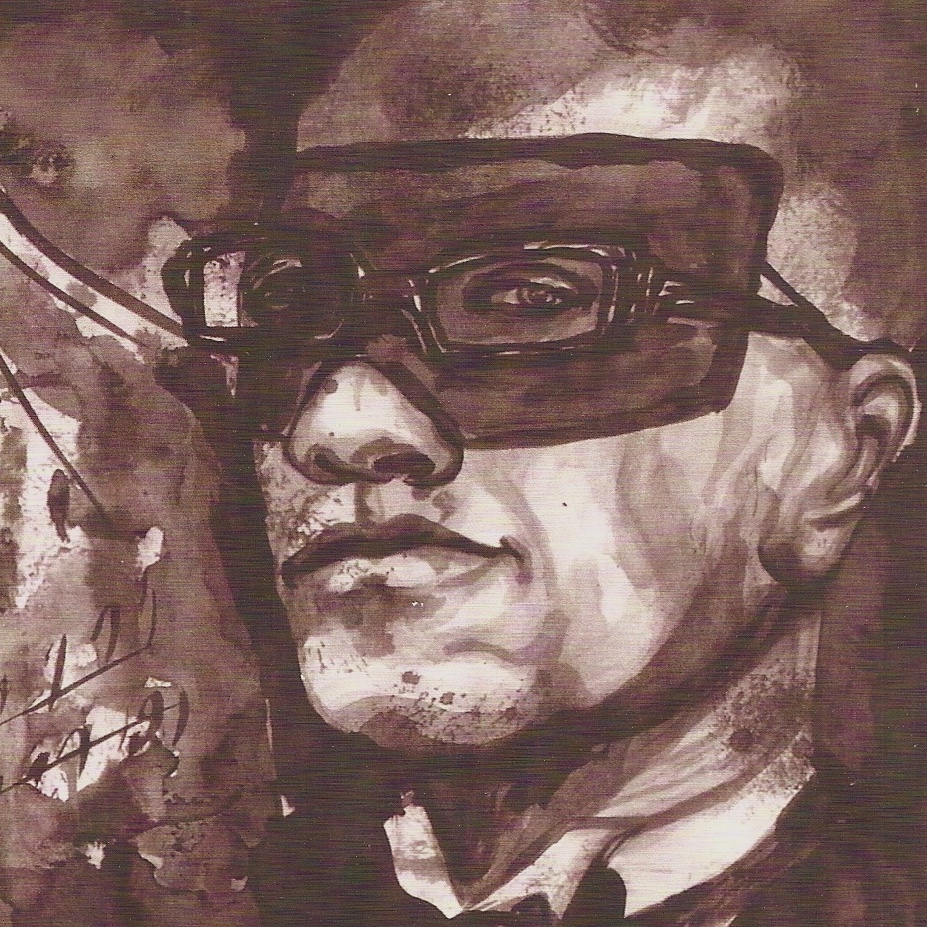
Author’s Portrait by Heather Marie © 2011
Robin Walz © 2024-2025
 Shady Detectives, Elegant Criminals & Dark Avengers