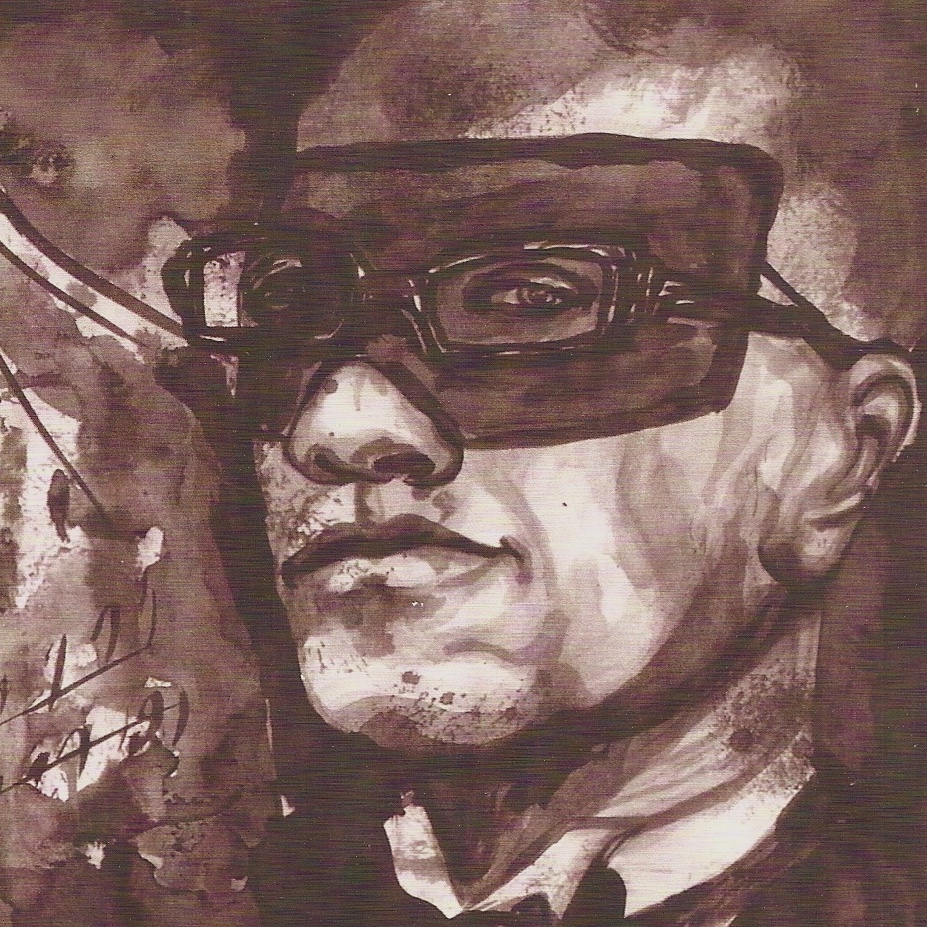

Engraving by Louis Dupré, “Mr. Fualdès” (1817). Private Collection: Ciminocorpus.
The morning of March 20, 1817, the corpse of retired prosecutor Antoine Bernadin Fualdès was discovered with a slashed jugular vein along the banks of the Aveyron River, outside the city of Rodez in Southern France. Over the next two years, an entirely fabricated and fantastic murder conspiracy reached monstrous proportions, in both the courtroom and the press. From there, the Fualdès Affair passed into popular legend.
Fualdès was a local notable who had served as a Royal Magistrate during the twilight of the Old Regime, on a Revolutionary Tribunal during the French Revolution, and as an Imperial Prosecutor under Napoleon. In retirement, Fualdès supplemented his income by loaning money to individuals and receiving interest payments on the principal. On March 19, 1817, he traveled from his estate to Rodez to collect nearly 2,000 francs from a debtor. At six o’clock the following morning, a tailor’s wife found a corpse along the banks of the Aveyron River. Around the same time, a servant from the Fualdès household arrived in the city and reported to the police that her master had not returned home the previous evening. Two officers went down to the river to retrieve the body. The local court magistrate confirmed the dead man was Fualdès. Initial speculation was that he had been the victim of a Royalist conspiracy for having been a Bonapartist.
That political interpretation was superseded the next day by a more tantalizing scenario. Fualdès’s walking cane and a blue-bordered white handkerchief had been recovered along the secluded Rue des Hebdomadiers in Rodez, near the home of the Bancal family who ran a disreputable inn. Rumors quickly spread that the Bancals, together with some lodgers and customers, had lured Fualdès into the inn, murdered him, and then threw his body into the river. Over the following days, the local magistrate questioned dozens of Rodez residents. Some recounted stories about hearing whistles, gunshots, and mysterious noises that night. Others claimed to have seen a boisterous parade of individuals carrying a bundle wrapped in sheets down to the river.
On March 22, three members of the Bancal family were arrested: derelict innkeeper Pierre Bancal (who died two months later from heart congestion, aggravated by cirrhosis of the liver), his wife Catherine Burguières (subsequently known as the Widow Bancal), and their nineteen-year-old daughter Marianne. The same day, an Alsatian day laborer and lodger named Jean Collard was arrested, as were husband and wife inn residents Antoine Palayret and Rose Boutonnet (both soon released).
Over the coming days, more town residents were arrested and brought before the local magistrate. The most notable was Bernard Charles Bastide-Grammont, Fualdès’s godson and brother-in-law. Next arrested was laundress Anne Benoit, owner of the blue-trimmed white handkerchief and the mistress of the previously arrested Collard. A few ne’er-do-wells who frequented the Bancal Inn were snagged in the dragnet as well: smuggler François Bach, casual laborer Joseph “The Imbecile” Missionnier, and porter Jean Bousquier.
After a week of interrogations, Bousquier admitted to being an accomplice in Fualdès’s murder. He also named co-conspirators, most surprisingly Joseph Jausion, a respected financial broker and Bastide-Grammont’s brother-in-law. The porter fingered Jausion as the ringleader of the murder conspiracy, who was arrested the following week.

Frontispiece portraits of Bousquier, the Widow Bancal, Jausion, and Bastide-Grammont in Histoire de l’horrible assassinat commis sur la personne de M. Fualdès (1818). Gallica: Bibliothèque nationale de France.
A trial against eight of the arrested took place in Rodez from August 18 through September 13, 1817.[1] The prosecutor’s opening statement invoked scenes of gothic horror:
The unfortunate Fualdès was stopped on the corner of the Rue des Hebdomadiers… where his cane was discovered eight and one-half hours later. A handkerchief was stuffed into his mouth to keep his mournful cries from being heard. Nevertheless, muffled sighs and stifled moans could be heard in the neighborhood….
He was dragged into the Bancal home, stretched out on a table, and slaughtered with a butcher’s knife. His blood was drained into a basin, given to a pig, and the rest thrown out…
After poor Fualdès lost his life in this most barbaric way, his body was placed on two bars, wrapped in a sheet, tightly bound by ropes over a wool cover, and around ten o’clock in the evening, four individuals carried it to the Aveyron River, led by a tall man armed with a double-barreled rifle and followed by two others, each of whom held an ordinary rifle.
Histoire complète (1817), pp. 12-13. Author’s translation.
Evidence presented in court against the accused was based entirely upon the character testimony of nearly 250 witnesses. The overwhelming majority spoke against the accused, with only a handful speaking on behalf of any particular defendant’s upright character. The most tantalizing testimony was provided by Clarisse Manzon, the daughter of an Auvergne district court magistrate, who may or may not have been in the inn at the time, and may or may not have witnessed the murder, but made quite a splash in court.[2]
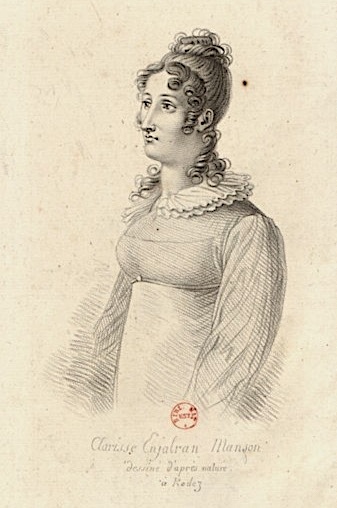
Engraved Portrait, “Clarisse Enjaleran Manson” (1817). Carl de Vinck Collection. Gallica: Bibliothèque nationale de France.
Clarisse Manzon had moved to Rodez the previous year with her young son to live in the proximity of her brothers, Edouard and Gustave, while her army officer husband was stationed elsewhere on maneuvers. Neighborhood residents held mixed opinions about her; she lived in a respectable enough boarding house, but was considered frivolous. She often could be seen shopping at boutiques or stepping out to the theater with girlfriends. Many afternoons she took promenades on the arms of young men, accompanied by her brother Edouard and his lady companions, and afterward frequented cafés or tapis verts (lowlife bars).
In the course of interviews conducted by the interrogating magistrate in the summer of 1817, some of town’s residents claimed to have seen Manzon on the streets of Rodez near the Rue des Hebdomadiers on the evening of Fualdès’s disappearance. The magistrate questioned Manzon about events she may have witnessed at the Bancal Inn, which she repeatedly denied. Unconvinced, the judge ordered her to appear as a witness in the Rodez trial.
In court, at first Clarisse Manzon insisted she had not seen Fualdès the evening before his death, nor had she entered the Bancal Inn. Then, her testimony took bizarre twists. She claimed that a woman at the inn, who had witnessed Fualdès’s murder, had grabbed and stuffed her into a kitchen cupboard. Sequestered within, she heard the sound of blood draining into a pig’s basin. When pressed by the prosecutor to reveal the woman’s name, Manzon fainted on the stand. After more questioning and fainting spells, the presiding judge ordered Manzon be held under house arrest.
At trial’s end, seven of the accused received death sentences or terms of imprisonment, with one acquittal. The hearsay trial in Rodez was regarded such a travesty of justice, however, that the sentences were held in abeyance and a second trial was scheduled for an Albi criminal court (cour d’assises) in the neighboring department of Tarn the following spring. In the interim between trials, Manzon published the sensationalist Memoirs of Madame Manzon, explaining her conduct in the murder trial of Monsieur Fualdès, written by herself and addressed to Madame Enjalran, her mother (1818), edited by “Le Sténographe Parisien” (pseudonym of Henri de Latouche, a disreputable journalist known for writing salacious articles; author’s title translation).
The audience gathered in the Albi courtroom in May 1818 was primed for further revelations. Far from correcting judicial errors, the second trial augmented them by increasing the number of character witnesses to nearly 350, over eighty percent of whom spoke against the accused. The trial also attracted national media attention, with newspaper journalists from Paris, Toulouse, and Lausanne dispatched to Albi to cover the proceedings. Not since the Calas Affair had a local trial captured such public attention, only in this case not for reasons of political and social vindication, but to magnify the Fualdès Affair to even more fantastic proportions.
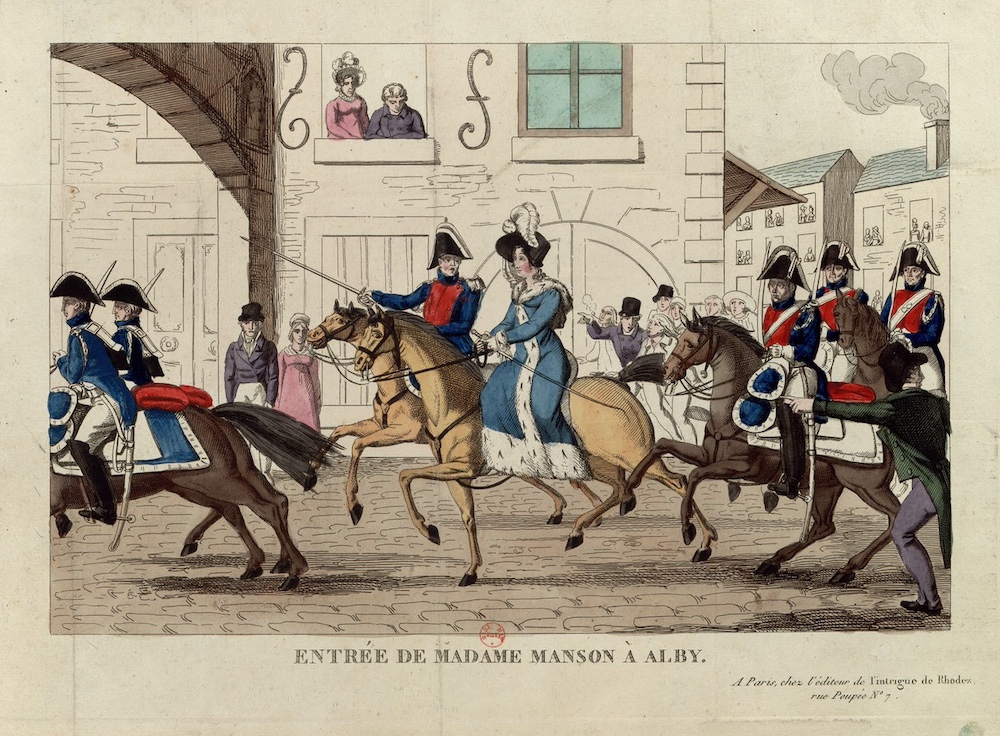
Colored Engraving, “Entrée de Madame Manson à Alby” (“Madame Manzon’s Entrance in Albi,” 1818). Gallica: Bibliothèque nationale de France.
Now charged as an accomplice to the murder conspiracy, Clarisse Manzon took center stage. At first, she seemed to deliver the goods. On the stand, she claimed to have witnessed Fualdès’s murder from within the Bancal Inn cupboard, pushed in by the Widow Bancal (which Bancal denied). Jausion spoke to her through the cupboard door, she continued, saying he was protecting her from Bastide-Grammont, who was threatening to kill her as a witness to the murder (which both Jausion and Bastide-Grammont denied).
Then, Manzon’s testimony spun completely out of control. She entered the Bancal Inn disguised as a man, after finding a jacket, hat, and pants along the Rue des Hebdomadiers. When fleeing the cupboard, blood from the pig’s trough stained Mazon’s pants, which she immediately burned because they would be incriminating. She repeatedly broke into tears and fainted on the stand. Exasperated prosecution lawyers stopped asking her questions, and both the courtroom audience and the press lost interest in her.[3]
On May 4, the Albi court affirmed the verdicts of the Rodez court, only this time the judgments were carried out. Bastide-Grammont and Jausion were sentenced to death for premeditated murder and for having defrauded Fualdès. Collard and the Widow Bancal were condemned to death as accomplices to premeditated murder, although her sentence was commuted to life imprisonment. The smuggler Bach, the imbecile Missionnier, and laundress Benoît were judged guilty of being accomplices without premeditation and received prison sentences of various lengths. Clarisse Manzon was acquitted of being an accomplice to murder, although judged guilty in public opinion no doubt for being a fabulist possessed by an overactive imagination. On June 3, Bastide-Grammont, Jausion, and Collard were executed.
A third trial of additional murder conspirators began in Albi in December 1818, but the case went nowhere. By mid-January the proceedings were abandoned. On his deathbed in 1821, the porter Bousquier dictated a letter confessing “everything that I have said relative to the murder of M. Fualdès… is entirely false,” and he requested a retraction be published. In a formal retraction issued at the Paris Prefecture of Police in July 1830, Clairisse Mazon declared, “I never set foot in the Bancal Inn and have no idea how the murder was committed.”[4]
In fact, no one knew who had killed Fualdès, nor how or why. The moneylender Fualdès had known enemies in Rodez as a usurer, including extended family members Bastide-Grammont and Jausion, each of whom had made threatening remarks about their in-law over financial disputes. Some of the city’s residents regarded Fualdès’s fate a settling of scores by persons unknown.
Most astounding is the fact that hundreds of townspeople in Rodez were drawn into an imaginary murder conspiracy and delivered prejudicial court testimony against the marginalized habitués of the Bancal Inn. As social psychologist has Michel-Louis Rouquette has pointed out in his scholarly study of the Fualdès Affair, only testimony that amplified the murder conspiracy scenario was admitted in court; testimony that deviated from it were deemed lies. The horrific story dictated the facts, not the other way around. A disreputable inn was transformed into the fantastical location of grotesque murder.
A modern innovation in the imaginary dimensions of causes criminelles célèbres had occurred over the course of the affair. Far from recounting and embellishing the details of a known crime, the Fualdès Affair was constituted entirely through hearsay and imagined confabulations.
Newspaper accounts of the court proceedings in Rodez and Albi trials were immediately redacted into compendium books. Apocryphal accounts, such as the Private and Criminal Lives of Bastide and Jausion and The Rodez Secret: An infanticide attributed to Jausion. Bancal’s deathbed confession. A forgotten episode in the memoirs of Madame Manson, were published even as the trials were still in session.[5] Scenes from Fualdès’s murder were visually reimagined and embellished through engravings and paintings, the most powerful being a series of ink, chalk, and wash studies made by the Romantic painter Théodore Géricault.[6]
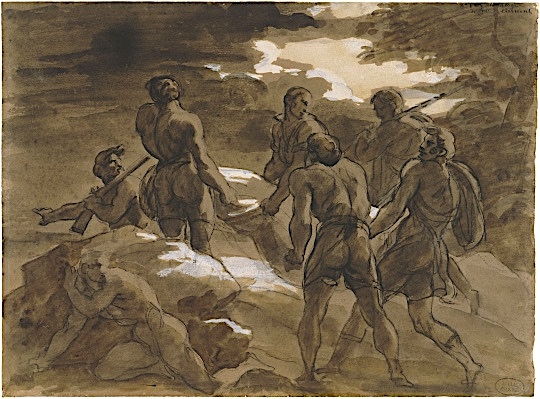
Théodore Géricault, Les Assassins portent le corps de Fualdès ver l’Averon (“The Murderers Carry Fualdès’s Corpse to the Averon River,” 1818). Collection: Palais des Beaux-Arts de Lille.
The Fualdès affair was also circulated at the level of popular mass print culture, in Bibliothèque bleue chapbooks and complainte murder ballads set to popular tunes.[7] As the verses to one chapbook concluded:
Who could believe it? Never mind the crime
Was unveiled before justice and punished in time,
No one can sensibly explain how or why.
God watches over all judgments from on high.
Placing ours before His would be rash, and therefore
Must we moan and remain silent evermore.[8]
Popular interest in the Fualdès Affair persisted in causes célèbres compilations and true crime books well into the twentieth century.[9] In place of “what actually happened,” the Fualdès affair made a foundational contribution to the collective imagination of crime in nineteenth-century France through its serial recirculation in mass print media. Murderous imaginings, not solutions, made the Fualdès Affair compelling.
NOTES
[1] The original list of the accused numbered eleven: Catherine Burguière (the Widow Bancal), her daughter Marianne Bancal, Bernard-Charles Bastide-Grammont, Jean-Baptiste Collard, François Bach, Joseph Missionnier, Anne Benoit, Jean Bousquier, Joseph Jausion, Victoire Bastide (Jausion’s wife), and Françoise Bastide (the Widow Galtier). Charges against the final three were dropped.
[2] In contemporaneous accounts, her surname is most often spelled “Manson.” In the early nineteenth century, spellings of proper names were still in flux in both official documents and press reports. In this entry, I have used contemporary orthography for names; e.g., Manzon for Manson, Collard for Colard, and Bach for Bax. Given and surnames were also written variously. Again, I default to current usage.
[3] “Madame Mason a ramené sur elle tous les regards: le public, fatigue de ses éternelles contradictions, semblait lui avoir retiré tout son intérêt.” “Séance du 3 avril,” in Histoire complète du procès (1818), p. 133.
[4] Retractions by Bousquier and Manzon are presented in the “Annexes” of L’Affaire Fualdès, pp. 236 and 238. Quotations translated by the author.
[5] Contemporaneous apocryphal works include: Notice sur la vie privée et criminelle de Bastide et Jausion. Détails sur leur exécution, dernières paroles en allant au supplice (Paris: Imprimerie de Vve Cussac, 1818); L’intrigue de Rodez, infanticide imputé à Jausion. Aveux de Bancal mouran. Episode oublié dans les mémoires de Madame Manson (Paris: Chez Plancher, 1818); Notice sur les secrets de Mme Manson, qu’elle a déclares à la cour d’assis d’Alby, sur l’assassinat de M. Fualdès (Paris: Imprimerie de Laurens, s.d. [1818]); and Mme Manson expliquée, ou Réfutation de ses mémoires, par M. P. L. (Paris: J.-G. Dentu, 1818).
[6] On depictions of Fualdès Affair in art, see Lela Graybill, Chapter 3 “Technologies of Witness: Violent Spectacle and the Fualdès Affair,” in The Visual Culture of Violence After the French Revolution (London and New York: Routledge, 2016).
[7] Ode sur la condamnation à mort des assassins de M. Fualdès dédiée aux membres de la Cour d’assises du Tarn du 1er trimestre de 1818 (Toulouse: Imprimerie de M. J. Dalles, 1818); Véritable complainte arrivée de Toulouse au sujet du crime affreux commis sur la personne de l’infortuné Fualdès par Bastide, Jausion et ses complices (Paris: Chardon aîné, 1818); and Assassinat Fualdès, récit en vers improvise par un quinze-vingt, après avoir entendu la lecture des écrits relatifs à cette affaire (Paris: Imprimerie de Plasan, 1818).
[8] “Qui le croirait? Qu’importe, avant que la justice / Dévoile ce forfait, et qu’elle le punisse, / On ne peut s’expliquer sur ces événemens. / Dieu veille de là haut à tous les jugemens; / Le nôtre avant le sien deviendrait téméraire, / Il faut donc se borne à gémir, et se taire.” In Assassinat Fualdès (1818), p. 7. Author’s translation.
[9] For example, Causes criminelles célèbres du XIXe siècle, rédigées par une société d’avocats, 4 vols. (Paris: H. Langlois, 1927-1828), whose first volume opens with an entry on the Fualdès Affair; Arthur Bernède, L’affaire Fualdès (Paris, Éditions Jules Tallandier, 1933); and Dr. Édmond Locard, Le magistrat assassiné (affaire Fualdès), series “Les Causes célèbres” (Paris: Editions de la Flamme d’or, 1954).
SOURCES
Histoire complète du procès relatif à l’assassinat du Sr. Fualdès (Paris: Eymer & Delunay, Libraire, 1817).
Histoire complète du procès du l’assassinat du M. Fualdès, instruit à Albi, devant la Cour d’assises du département du Tarn, pour faire suite à la première procédure que nous avons déjà publiée (Paris : Eymery, Delaunay, and Baudouin, 1818)
Mémoires de Madame Manson, explicatifs de sa conduit dans le procès de l’assassinat de M. Fualdès; écrits par elle-même et adressés à Madame Enjalran, sa mère (Paris: Pillet, 1818).
Jacques Miquet and Aurélien Pierre, eds., L’Affaire Fualdès, le sang et la rumeur (Rodez: Rouergue, 2017).
Michel-Louis Rouquette, La rumeur et le meutre. L’affaire Fualdès (Paris: Presses Universitaires de France, 1992).
Updated: January 13, 2025
Robin Walz © 2025
 Shady Detectives, Elegant Criminals & Dark Avengers
Leave a comment