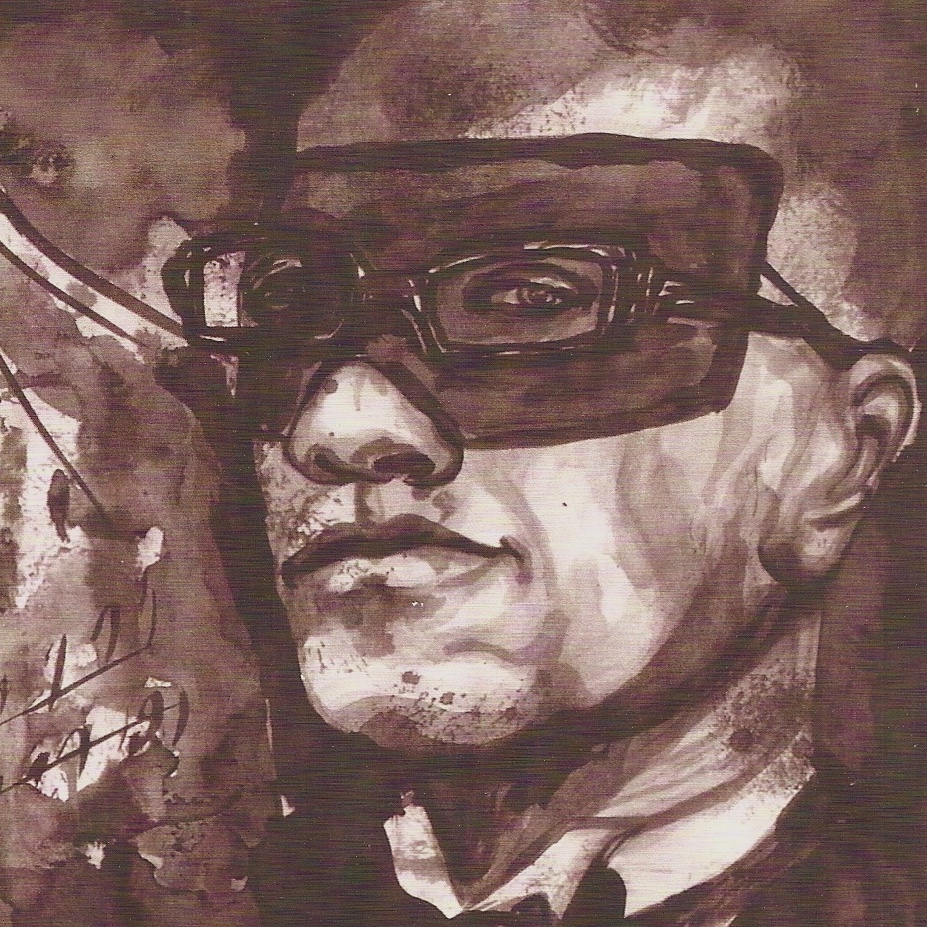

Frontispiece portrait of Lacenaire by Levilly in Mémoires, révélations et poésies de Lacenaire écrits par lui-même, à la Conciergerie, 2 vols. (Paris: Chez les Marchands de Nouveautés, 1836). Gallica: Bibliothèque nationale de Paris.
In the month before his execution in January 1836, convicted thief and murderer Pierre-François Lacenaire spent his final days in the Conciergerie prison of Paris writing poetry and composing his memoirs. Midway through his autobiography, Lacenaire addressed his future readers:
“Now, for those of you who really want to understand me, listen carefully. For a long time, I hadn’t realized that I could become a professional thief. Finally, I came across the Mémoires of Vidocq, which made me realize that antipathy toward society could be a kind of class warfare.”[1]
From this revelation, Lacenaire made crime his vocation as an act of individual defiance against society’s laws and mores, directed against whomever he wished and carried out when, where, and how he decided. Displaying a persona of supreme egotism, Lacenaire reveled in being a social pariah. He fancied himself a brilliant mastermind who possessed the will and intellect to devise elaborate criminal scenarios and employ others to carry them out.
In fact, Lacenaire was never all that successful as a criminal. His schemes rarely panned out, as he botched thefts and murders more often than not. After years of failures and imprisonment, in January 1835 he and two accomplices were arrested and charged with multiple counts of murder, attempted murder, and theft. Once the court trial began on November 12, however, the frightfulness of Lacenaire’s crimes took a back seat to press coverage that focused on his handsome appearance, fashionable dress, intelligence, and sharp wit. Despite the efforts of the prosecution and medical experts to characterize Lacenaire as aberrant and abhorrent—an emotionally detached murderer, dangerous freethinker, and immoral atheist—he cut a fashionable image with the public, both within the courtroom and in the press. His Mémoires, released four months after his execution, together with published prison interviews and books hastily compiled from press accounts the trial, immortalized Lacenaire as the “elegant criminal” in the French collective imagination for the remainder of the nineteenth century, and beyond.
Public fascination in France for stories about criminals was nothing new. Three centuries before Lacenaire, stories about criminals were already being published in Bibliothèque bleue chapbooks. The earliest were tales about “human monsters,” the mixed progeny of animals and humans or the unruly and violent spawn of the Devil, born without souls but who could receive Christian redemption by killing Saracens (Muslims). Other chapbooks featured argot dictionaries of criminal slang and plays about the secret rituals of an imaginary and subterranean “fourth estate” of rogues, vagabonds, and highwaymen, ruled over by the Grand Coësre (“Beggar King”) and his hooded cagoule court, a menacing and imaginary inversion of the three traditional social orders of clergy, aristocracy, and commoners. By the eighteenth century, Bibliothèque bleue chapbooks recounted the exploits of actual criminals, like the bandit Cartouche and the smuggler Mandrin, who were celebrated as popular heroes within France and internationally.
In addition, the popular criminal imagination was fueled by canards sanglants, or “bloody broadsheets,” about the crimes and executions of notorious criminals, read across all social classes. Originating in the prerevolutionary Old Regime, initially canard broadsheets were about current events, covering a wide variety of military, political, or societal topics, and were marketed to the aristocratic and clerical elite. As gazettes and newspapers began to superseded broadsheets in the eighteenth and early-nineteenth centuries as news sources for the upper and middle classes, the content of canards became increasingly sensationalized, incredible, and lowbrow (even today, in both French and English a canard is a preposterous news report). These less newsworthy canards featured outlandish stories about miraculous events, sightings of fantastic and exotic animals, accounts of natural disasters such as earthquakes, fires, and floods, and reports of outbreaks of cholera, plague, and rabies. After mid-century, canards incorporated new horrors generated by the industrial revolution into their broadsheets as well, such as train wrecks and mine explosions.
Among the most popular were canards sanglants, which sensationalized the details of horrific crimes, trials, and executions. Printed on a single large sheet of paper, the standard format had been established in the sixteenth century and persisted relatively unchanged for the next three hundred years. The masthead was printed in large, bold, and capitalized letters, whose title elements were derived from a stock repertoire of the nouns like “murder,” “massacre,” “rape,” and “execution” and modified by adjectives such as “horrible,” “tragic,” “lamentable,” “cruel,” “disastrous,” “terrifying,” “strange,” “bloodthirsty,” and “inhuman.”[2] Below the title, a large wood-block image filled the center of the paper, sometimes recycled from previous broadsheets. A description of the crime followed, including such details as the crime committed, where, by and against whom. The broadside typically ended with a complainte or murder ballad, summarizing the crime in verse and set to a popular tune, so the community could sing along at executions and used as a mnemonic device to recall the story later from memory. Popular canards sanglants were reprinted and circulated for several years. Their cultural value lay less in the authenticity of the sensationalist details, than their use in fashioning a collective imagination about crimes and criminals.

“HORRIBLE MURDER committed on Rue Traversine against two individuals, one stabbed eleven times with a leather-slicing knife and the other by a single blow that severed an artery on the right arm” (no date). Reproduced in Seguin, Nouvelles à sensation (1959). Author’s translation.
Another genre of popular crime publications to emerge in the eighteenth century were causes célèbres, originally pitched to aristocratic and bourgeois readers about miscarriages of justice and scandalous court cases that threatened the foundations of Bourbon society. One of the most famous was the Calas Affair, Voltaire’s posthumous exoneration of Jean Calas, a Protestant merchant wrongly convicted by a Catholic court for the presumed murder of his son and who was subsequently executed. Another was the “Diamond Necklace Affair,” about the Cardinal de Rohan’s gift of an ostentatious jeweled necklace, originally commissioned by Louis XIII, intended for Marie Antoinette but delivered instead to a prostitute posing as the Queen.
In the mid-eighteenth century, a popular true crime genre emerged, causes criminelles célèbres, which detailed sensationalist crimes that “excite an insatiable curiosity more ingeniously that the scenarios of playwrights and novelists.”[3] According to Parisian editor Armand Fouquier, the first major collection was Causes célèbres et intéressantes (“Notorious and Interesting Criminal Cases”), published in twenty-volumes, 1738-1750. The series proved both enormously popular and enduring, reissued in both abridged and expanded editions over the course of the next century. Over the next century, publishers competed to assemble and sell their own causes criminelles célèbres collections, issued in installments by subscription and subsequently compiled and sold as books.

Armand Fouquier, Causes Célèbres for Everyone, Illustrated Popular Edition (Paris: Lebrun and Co., Editors, 1860). Collection: Bibliothèque des littératures policières, Paris. Author’s translation.
In the early-nineteenth century, press coverage of criminal court proceedings became a regular feature of daily newspapers. In 1825, editor Jean-Achille Darmaing founded the Gazette des tribunaux, (“Gazette of Court Proceedings”), dedicated entirely to recounting criminal trials. Over the next decade, newspapers like Le Droit, journal des tribunaux, de la jurisprudence et des débats judiciaries (“The Right to Know: Journal of Court Proceedings, Jurisprudence, and Judicial Debates,” 1835), the Gazette du Palais (“Royal Gazette,” 1837), and L’Audience (“Public Hearing,” 1837) followed, which reported the proceedings of criminal trials and then reprinted the coverage as collections in bound volumes. By the late-nineteenth century, nearly all mass-circulation newspapers contained a judicial chronicle column in their pages. Particularly spectacular grandes affaires criminelles (“major crimes”) would make the front page for several days or even weeks. Press reportage of sensational crimes nurtured popular enthusiasm for consuming sordid events as daily entertainment, beyond any legal, political, or social merits.
Long before Lacenaire ever took the stand as a thief and murderer, the published details of sordid crimes had been circulated and popularly consumed through Bibliothèque bleue chapbooks, canard sanglant broadsheets, causes criminelles célèbres collections, and sensationalist criminal trial coverage in newspapers. What distinguished Lacenaire from earlier criminals who committed such horrific acts was the celebrity status conferred upon him within courtroom and in the press, as well as his literary self-fashioning through poetry and his autobiography. Neither a rogue nor a ruffian, Lacenaire was the complete bourgeois gentleman — handsome and fashionable, educated and articulate, a poet and a freethinker. As French social and cultural historian Anne-Emmanuelle Demartini has emphasized, Lacenaire was a human monster indeed, but a distinctively modern one — the moral, political, and criminal deformation of the aspiring bourgeois. And in the popular press and literature, Lacenaire was transformed into a new kind of Romantic hero, the poet-assassin.
The elegant criminal Lacenaire did not appear ex nihilo, however. In the decades preceding his trial and execution, press coverage had already begun to elevate murder trials to hallucinatory proportions, and on the dramatic stage murderers became popular antiheroes. So before returning to Lacenaire, the next few entries step back to review the Fualdès Affair (1817-1818), about an imagined murder conspiracy magnified in court and widely circulated through both the regional and national press. And on the melodramatic stage, the fictional thief and murderer Robert Macaire was transformed into a comedic character by the famous nineteenth-century French actor Frédérick Lemaître.
NOTES
[1] Lacenaire, Mémoires, p. 107. Throughout this post, translations are by the author.
[2] Lever, Canards sanglants, p. 12.
[3] Fouquier, Causes célèbres de tous les peuples, p. 1.
SOURCES
Lise Andries and Geneviève Bollème, La Bibliothèque bleue: Littérature de colportage, Collection “Bouqins” (Paris: Robert Laffont, 2003).
Roger Chartier, ed., Figures de la gueuserie, Collection “Bibliothèque Bleue” (Paris: Montalba, 1982).
Anne-Emmanuelle Demartini, L’affaire Lacenaire (Paris: Aubier, 2001).
Armand Fouquier, Causes célèbres de tous les peuples, nos. 1-120 (Paris: Lebrun et cie, éditeurs, 1860).
Dominique Kalifa, “La chronique judiciaire,” in La Civilisation du journal. Histoire culturelle et littéraire de la presse française au XIXe siècle, ed. Dominique Kalifa, Philippe Régnier, Marie-Ève Thérenty et Alain Vaillant (Paris: Nouveau monde, 2012).
Pierre-François Lacenaire, Mémoires, ed. Monique Lebailly (Paris: L’Instant, 1988).
Maurice Lever, Canards sanglants: Naissance du fait divers (Paris: Fayard, 1993).
Sarah Maza, Private Lives, Public Affairs: The Causes Célèbres of Prerevolutionary France (Berkeley: University of California Press, 1995).
Jean-Pierre Seguin, ed., Nouvelles à sensation: Canards du XIXe siècle (Paris: Armand Colin, 1959).
Updated: January 11, 2026
Robin Walz © 2024
 Shady Detectives, Elegant Criminals & Dark Avengers
Leave a comment